Under new ideas from HMRC, taxpayers may be fined for making “innocent mistakes” on their tax forms.
The tax agency intends to grant itself further authority to ascertain whether landlords and independent contractors purposefully filed false self-assessment tax returns.
As of the present, HMRC only considers an error to be “deliberate” if the taxpayer intentionally provided false information.
However, if a taxpayer commits a “careless error” and neglects to fix it, the proposed legislation permits the authority to impose a penalty.
The amount of the penalty is determined by a number of variables, including whether the error was intentional or careless, meaning the taxpayer did not intentionally provide false information.
If “deliberate” errors are later discovered by HMRC, taxpayers would be subject to further fines. Careless errors would result in penalties ranging from 0% to 30% of the tax lost, while intentional errors could result in penalties as high as 100%.
In order to concentrate on more complicated cases of tax evasion, HMRC intends to use the policy to increase compliance and free up resources.
However, experts have cautioned that the plans might put taxpayers under a “greater burden.”
“Most people are not represented by a tax adviser – and so taxpayers may genuinely not know when they have made an error and could find themselves exposed to higher penalties,” stated Nimesh Shah of the accounting firm Blick Rothenberg.
He noted that the tax system has become more complex due to government changes, which may raise the possibility of taxpayers filing false tax returns.
He stated, “A taxpayer may make an innocent mistake because they don’t understand the rules.”
The shift would be “particularly problematic” for big businesses, according to Helen Buchanan of the legal firm Freshfields. “Deliberate penalties can have serious financial and reputational repercussions,” she stated.
There will be a technical consultation on the law through September 7. The potential date of its implementation is not predetermined.
If passed, it will impose a new duty on taxpayers to fix errors as soon as they are discovered.
It may be challenging for HMRC to determine when a taxpayer discovered an issue, experts have said. Mr. Shah expressed worry that HMRC would use hindsight to evaluate taxpayer behaviour.
Additionally, the law would grant the tax office the authority to formally notify the taxpayer to verify their tax status by issuing a Customer Correction Notice.
There won’t be any penalties if the taxpayer fixes a negligent error after receiving their first Customer Correction Notice within six years. However, if they don’t comply, the tax office can raise tax assessments going back up to 20 years and interpret the mistake as intentional for penalty purposes.
“These reforms are part of the Government’s wider drive to close the tax gap and collect additional tax,” stated Dawn Register of the accounting firm BDO. Additionally, HMRC hopes that these actions will raise taxpayer awareness and encourage them to take corrective action.
The suggestions follow Angela Rayner’s recent reinstatement as Housing Secretary, who neglected to pay the appropriate stamp duty on her Hove flat due to complicated trust arrangements for her disabled son.
Ms. Rayner settled the £40,000 outstanding stamp duty payment without incurring any financial penalties after being exonerated of intentional tax evasion.
“This is the problem with the subjectivity in these provisions because I could envision a good argument that she was ‘careless’ because she did not take advice on a complex matter,” Mr. Shah stated.
“We know most of our customers act in good faith and want to get their tax right,” an HMRC representative stated. These suggestions are intended to reduce fines for individuals who promptly fix errors when we identify them and to expedite and simplify the process.
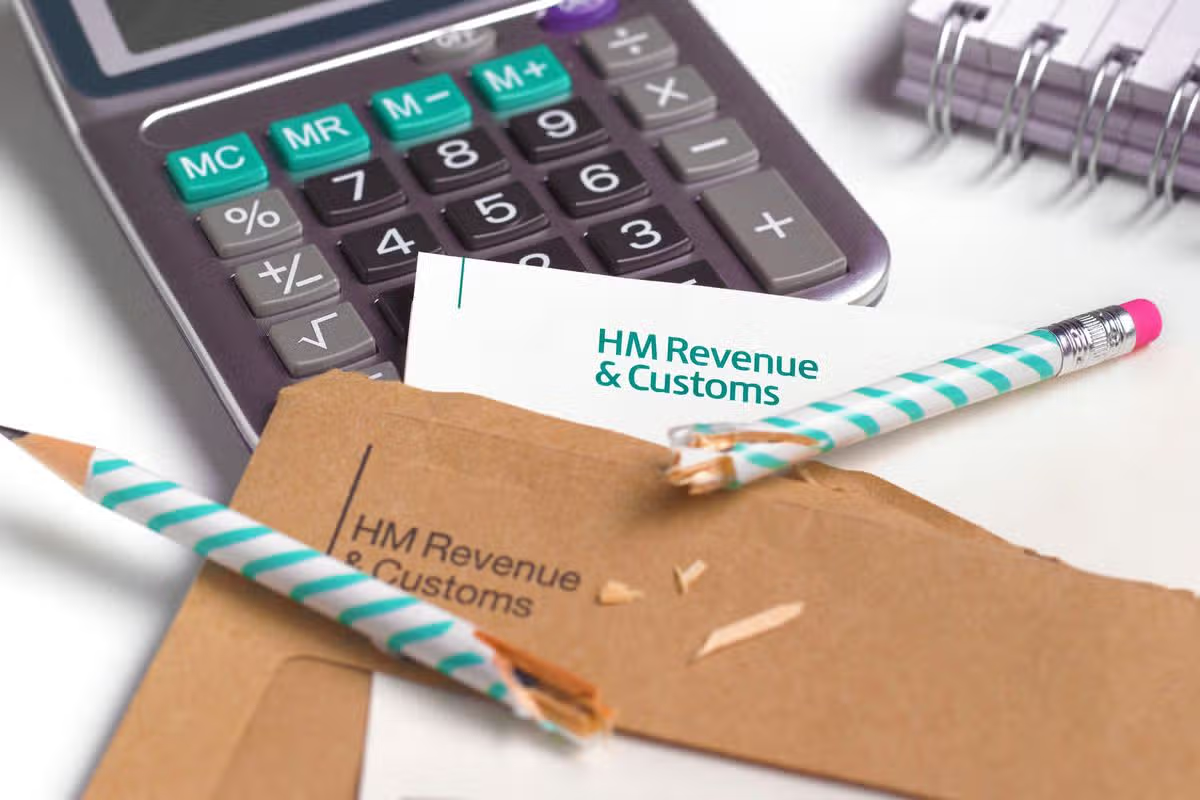
A new proposal could grant HMRC more authority to impose penalties on taxpayers of up to 30%. Millions of people in the UK could be impacted by the change since they could be charged for even “careless errors” on their self-assessment tax forms.
As of right now, the regulations permit HMRC to impose fines on errors that are deemed to be “deliberate,” such as providing documents that intentionally mislead your tax liability. But even “innocent” errors that aren’t intentional could result in a letter from HMRC and a fine under the new regulations.
The circumstances behind a taxpayer’s error will determine how much they are punished. According to the Telegraph, intentional errors would still result in significantly harsher punishments than “careless errors.”
While harmless errors may result in fines of up to 30%, deliberate errors may result in fines of up to 100% of the tax lost.
“Most people are not represented by a tax adviser – and so taxpayers may genuinely not know when they have made an error and could find themselves exposed to higher penalties,” Nimesh Shah of accounting firm Blick Rothenberg told The Telegraph.
“If a taxpayer doesn’t understand the rules, they could make an innocent mistake.”
Additionally, he noted that it might be challenging for HMRC to pinpoint the precise moment a taxpayer realised their error in order to determine whether they ought to have fixed it sooner.
A taxpayer’s past will also be taken into account by the new system. A person won’t be fined if they correct their error after being informed by HMRC and they haven’t received any other formal notices in the previous six years.
However, a taxpayer’s mistake will be considered intentional if they do nothing to fix it. After then, HMRC may review tax assessments from up to 20 years ago.