Tesla owners are accustomed to receiving over-the-air software updates, but these patches typically affect the car itself. Tesla has begun releasing a firmware upgrade for its portable Mobile Connector charging equipment in an unanticipated hardware drop.
Tesla forum member @koalafiedtesla brought attention to the update by sharing a screenshot of the installation alert on their car screen on X and writing:
“It’s intriguing even tho I’ve never heard of a Tesla mobile connector receiving a software update.”
How Updates for Tesla’s Mobile Connector Operate
The Mobile Connector does not have integrated cellular or Wi-Fi antennas, in contrast to the car itself or Tesla’s other home charging equipment. Rather, the car serves as an intermediary. When connected via the Mobile Connector, your Tesla gets the firmware update via its own internet connection, stores the file, and then sends the package straight to the device.
Gen 2 Mobile Connector units seem to be the focus of this particular rollout. It’s yet unknown if the same software push will be applied to other hardware builds, including Tesla’s Gen 3 Mobile Connector with PowerShare features.
The patch itself is installed quietly and doesn’t require a reboot or prompts for manual installation. The car screen only shows an alert indicating that a charge connector update is underway once the download has started.
Options for Home and Portable Trickle Charging
One of Tesla’s most useful accessories is still the Mobile Connector. It is frequently used for “trickle charging” at home or while travelling. It draws 12 amps from a regular 120-volt household socket, increasing range by roughly 3 to 4 miles per hour. Additionally, it can draw up to 32 amps and provide about 30 miles of range per hour when plugged into a 240-volt NEMA 14-50 outlet.
As a hardwired solution for quicker home charging, Tesla’s Wall Connectors are the best choice for those seeking dedicated residential charging. To find out more about the alternatives available to owners, view our comprehensive comparison of Tesla’s Wall Connectors and Mobile Connectors.
Because the Mobile Connector is a relatively simple piece of hardware, software updates are rare, but they are not entirely unheard of. Firmware updates are periodically released by Tesla to enhance heat management, optimise communication protocols between the connector and the onboard charger, or fix problems that can result in unplanned charging disruptions.
There is no indication of the precise contents of this firmware bundle because specific release notes have not been made public. But it’s probably just a few minor adjustments or bug fixes. The next time you use your Mobile Connector to charge, keep it connected in to make sure your portable device gets the most recent bug updates.
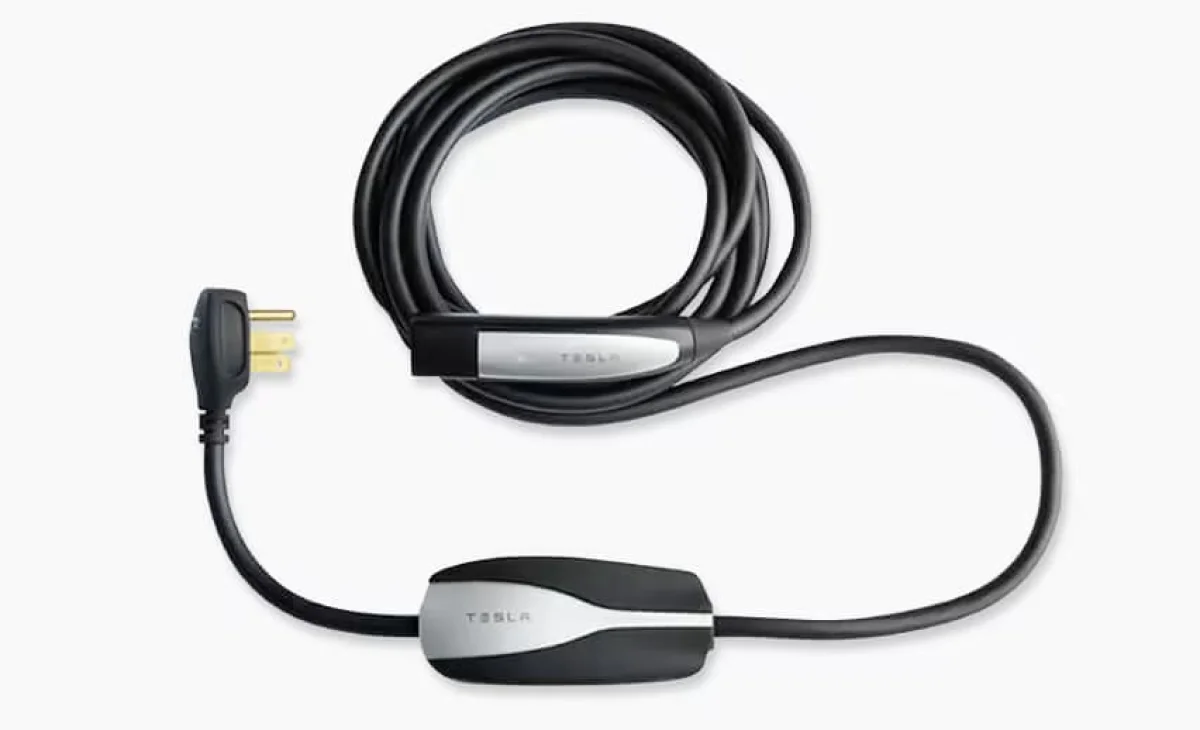
The delivery method for the firmware update that Tesla is releasing for its Mobile Connector differs slightly from a standard OTA drop in that the heavy lifting is done by your car. The Mobile Connector remains plugged into the car while the car downloads and transmits the software package from Tesla’s servers rather than updating immediately over Wi-Fi. This is all the information that owners should know.
The Update Server Is Your Vehicle
The Mobile Connector cannot pull updates on its own because it lacks a cellular radio and independent Wi-Fi. Rather, the car connects to Tesla’s servers, gets the software, and pushes it to the connector via the charging wire. This is how Tesla routes the firmware thru the car. For the duration of the procedure, the connector must be physically plugged in. You run the danger of leaving the firmware in an incomplete condition if you unplug it in the middle of an upgrade.
The Software Version of Your Car Determines the Trigger
Depending on the version of Tesla’s car software you’re using, the upgrade begins in different ways. The procedure is simple for cars running software 2024.14 or later: your battery only needs to be more than 5% charged, and the update starts on its own after roughly ten minutes of charging via the Mobile Connector. According to Tesla’s stated guidelines, you must manually set your charge limit below the current level after charging to at least 55% on earlier vehicle software in order to initiate the process.