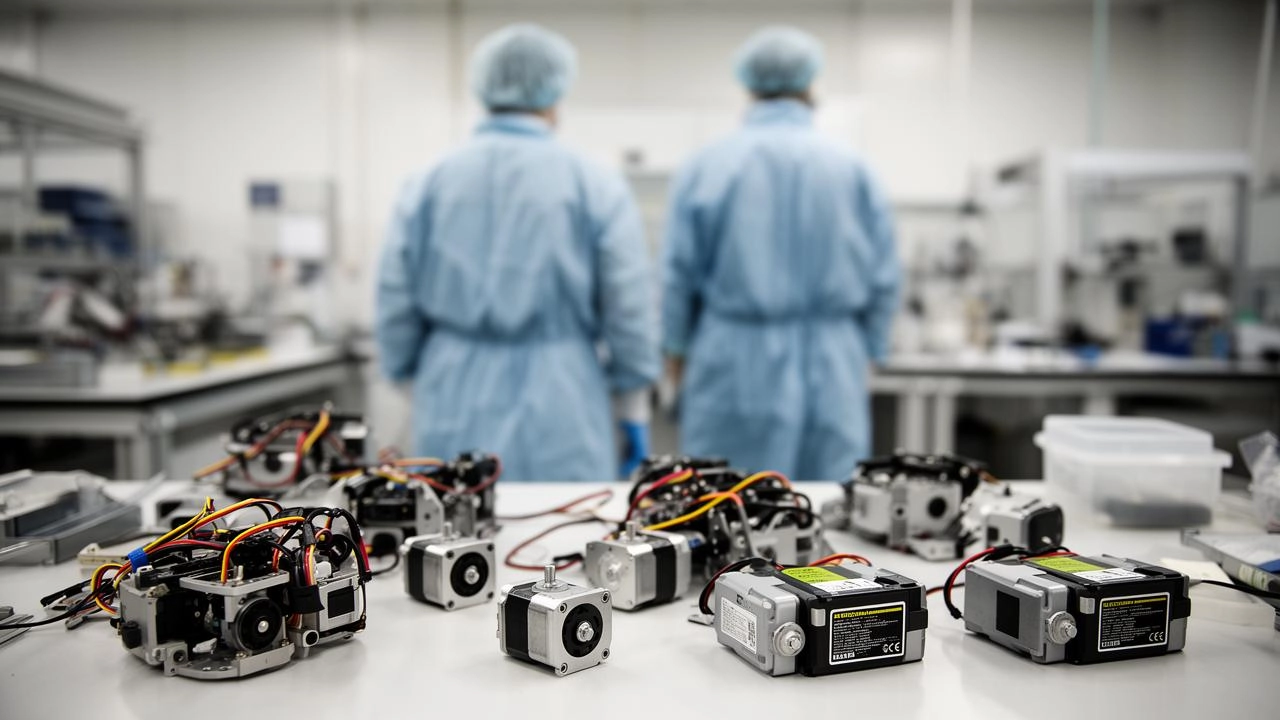
A breakdown video of China’s Unitree Technology G1 humanoid robot was recently released by Japan’s Nikkei xTECH and received a lot of attention. The G1’s highly integrated batteries, biomimetic ankle linkage structure, and high-performance motors astounded Japanese engineers, who considered its technical level to be exceptionally high.
In the end, they acknowledged that China’s humanoid robot research and development has advanced past the demonstration stage and that Japan is unlikely to catch up in the near future. This result highlights a significant change in the global humanoid robotics competitive landscape in addition to reflecting China’s advances in robotics hardware.Japan, a former leader in industrial robotics, is under unprecedented pressure due to China’s tremendous advancements in the field of humanoid robotics.
The well-known Japanese tech magazine Nikkei xTECH recently published a comprehensive deconstruction video in which its engineers disassembled a G1 humanoid robot from Unitree Technology in China. The Japanese team candidly declared that it is “probably unrealistic” for Japan to catch up to China in humanoid robotics in a short amount of time after extensively scrutinising the internal structure and key components.
After going public on July 23, the video swiftly sparked debate in Chinese and Japanese tech and financial circles. Japanese journalists and engineers viewed the dismantling procedure almost like a “anatomy lesson,” trying to learn the secrets of China’s quick robotics advancements from every wiring harness and screw. But as the dismantling progressed, their initial curiosity gradually gave way to a sophisticated sense of admiration.
The Japanese engineers highly praised the energy system of the G1 robot, according to a report by Guancha.cn that cited the video clip. They discovered that the G1’s battery pack maintains incredibly high output power while achieving remarkable miniaturisation. “The battery’s ability to remain so compact while delivering such high output power is extremely appealing,” an engineer said in the video. This high-energy-density battery technology is a crucial factor in determining whether a bipedal robot, which needs explosive strength and prolonged endurance in a small body space, can leave the lab.
A quantitative benchmark for this evaluation is provided by Unitree’s stated specifications: the G1 has a 13-cell lithium battery configuration with a 9,000mAh quick-release smart battery. The complete device, including the battery, is 1,320 mm tall, weighs about 35 kg (77 lbs), and has an official battery life of almost two hours. The Japanese researchers initially focused on the battery’s power density and volume control in order to simultaneously drive 23 joint motors within this body size.
The G1’s lower-limb design became the main focus of the Japanese dissection. If the battery is the robot’s “heart,” then the joint motors are its “muscles and bones.” The engineers were astounded by the ankle construction, according to the report.
“From the calf to the sole, the most distinctive feature is that its mechanical movement reproduces the motion of a human ankle,” the Japanese engineers observed during disassembly. The G1’s ankle design is not a straightforward rigid connection; rather, it highly replicates the motion mechanics of the human ankle through a complex linkage mechanism. They found that the G1’s calf contains two motors, each of which drives two metal connecting rods that are fastened to the ankle in a reciprocating up-and-down action.
More importantly, the design dynamically modifies the ankle angle by deftly coordinating with the linkage movement through the use of many bearings. In addition to giving the robot a more human-like gait, this design exhibits a very high level of impact resistance and terrain adaption. “The motor structure used in this robot is very noteworthy; you can see from the core components that its technical level is quite high,” the Japanese experts stressed.